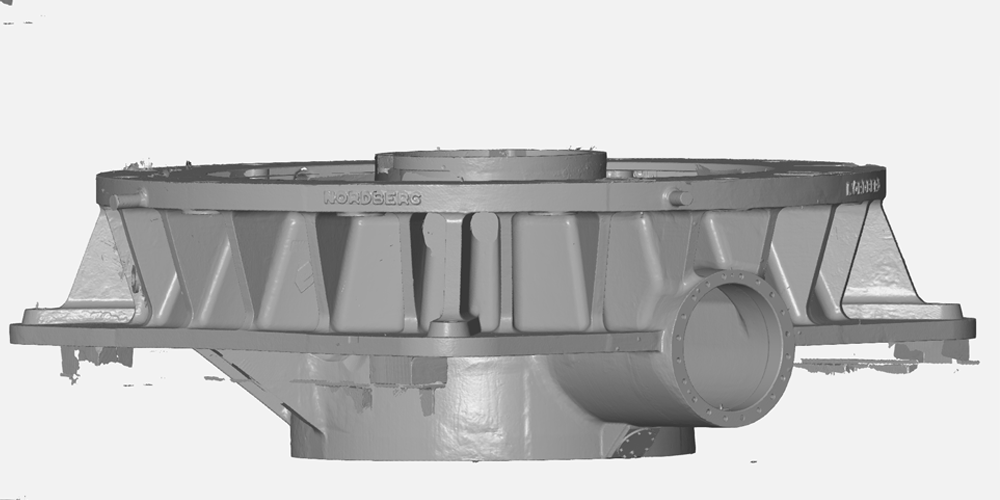
The decision to use MetraSCAN BLACK+™|Elite, the industry’s fastest optical CMM scanner, along with Inspection, the software module for part inspections in the Creaform Metrology SuiteTM, changed the entire trajectory of the project. For Divija Technologies, this scanner brought something their previous equipment never could: unprecedented freedom. Freedom from targets. Freedom from sprays. Freedom from rigid setups that simply didn’t work in rugged outdoor conditions.
The MetraSCAN BLACK+™| Elite’s ability to capture thin surfaces, complex curves, and discontinuous segments without targets made the inspection manageable throughout. The system’s large measurement volume allowed the team to move these enormous components around with far fewer adjustments. It also meant they could reach both sides of sheet-metal-like areas (sometimes only three millimetres thick) without any extra prep work.
“Once the part was inside the measurement volume, we knew we could scan it,” explained Janakiraman.“That level of assurance is rare on a job like this.” Janakiraman Kanthinathan
Even the mud and unstable planks caused by heavy rain couldn’t derail the process. The scanner remained consistent, and Inspection handled 20–30 GB data sets without crashing; this was a level of stability the team had not always experienced with previous systems.



Leave a Reply
Want to join the discussion?Feel free to contribute!